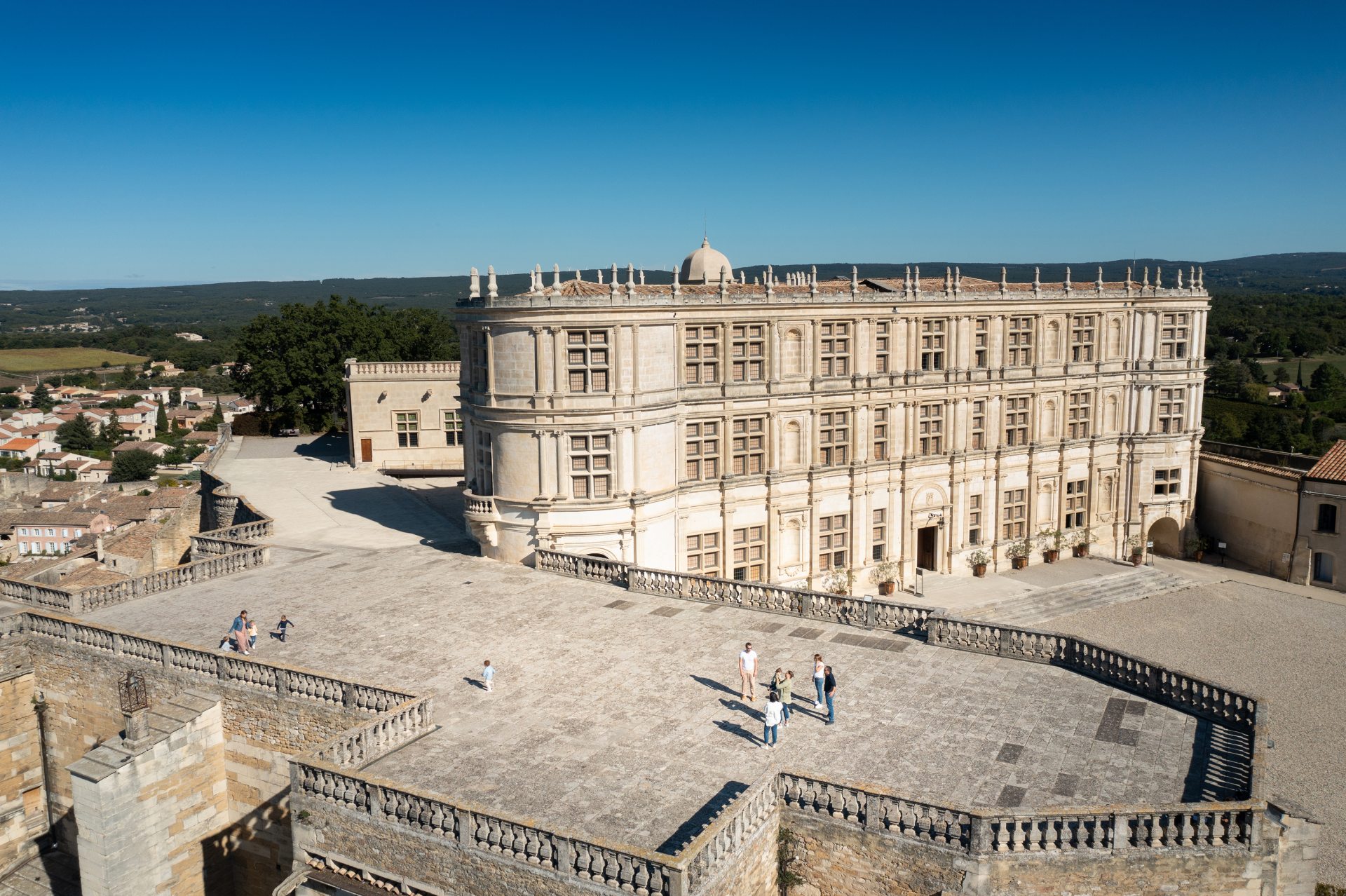
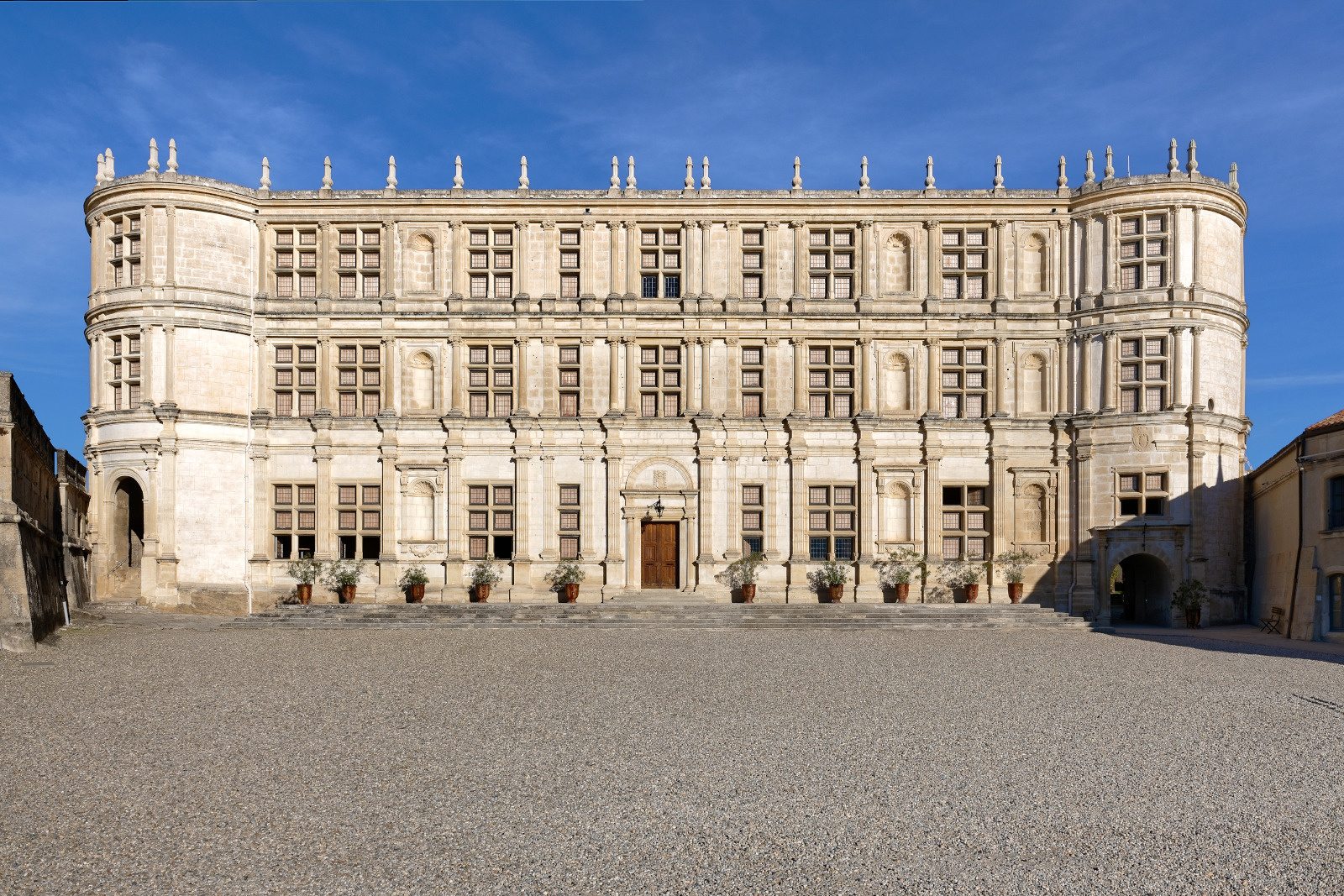
The austere medieval fortress was transformed into a pleasure palace at the end of the 15th century by Gaucher Adhémar , Baron of Grignan. His son, Louis Adhémar , Governor of Provence, commissioned the majestic Renaissance façade, punctuated by windows, pilasters, and columns. This marked the first golden age of the château: the Adhémar family were powerful figures in Provence, and the building became one of the finest Renaissance palaces in southeastern France.
Two centuries later, the Count of Grignan, François de Castellane Adhémar de Monteil, lieutenant general of King Louis XIV in the government of Provence, had a new entrance built befitting his position: he pierced a large door in the south façade, leading to the main courtyard. This was the period of the "royal château," which saw the birth of the famous correspondence between Madame de Sévigné and daughter Françoise, Countess of Grignan.
Dismantled during the French Revolution, the iconic facade of the castle was restored by Marie Fontaine, the last great lady of Grignan, owner of the premises from 1912 to 1937
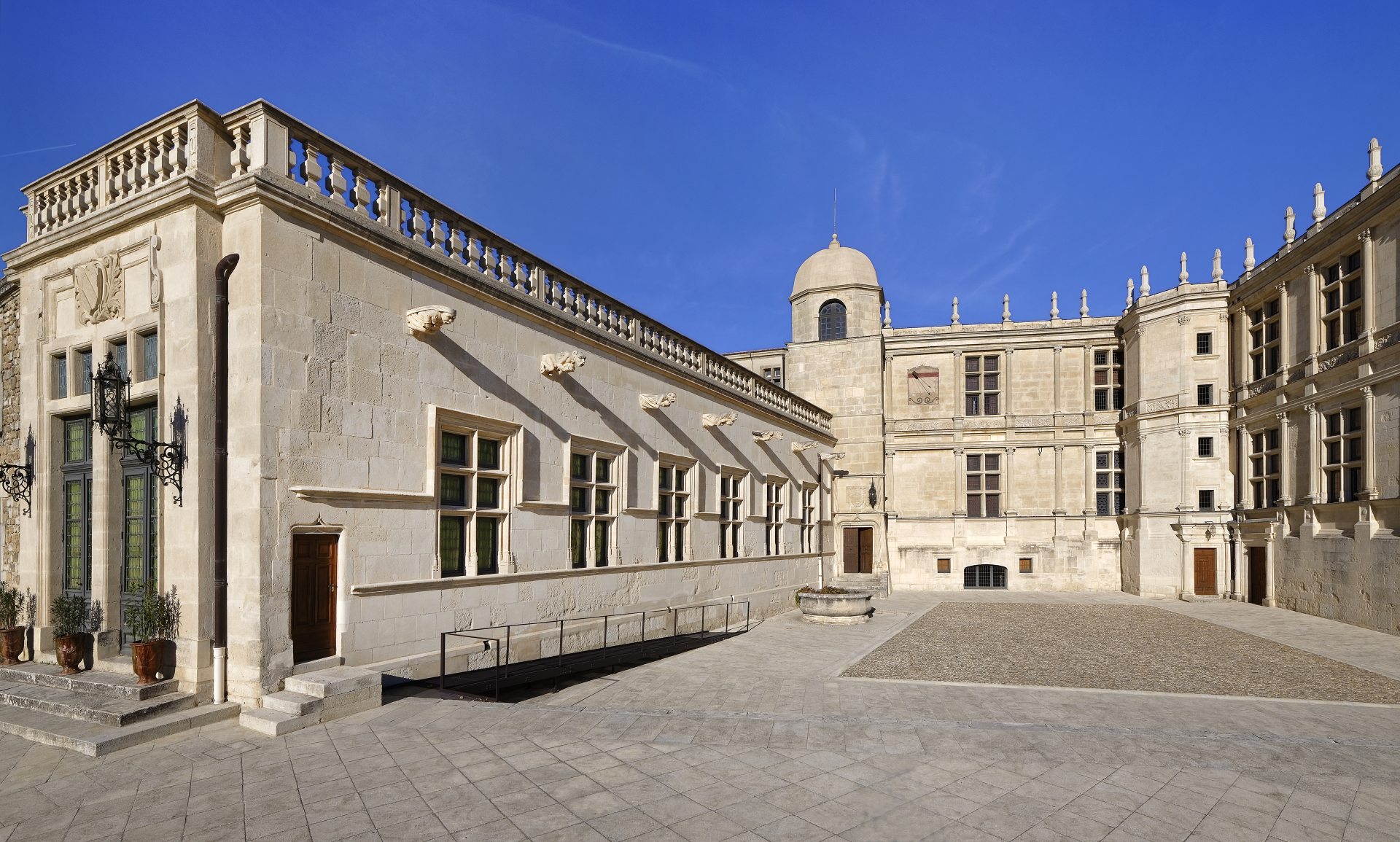
Equipped with a well and a cistern in the basement, the upper courtyard of the castle has been enclosed since the Middle Ages. At the turn of the 16th century , Baron Gaucher Adhémar de Monteil , and later his son Louis , transformed and embellished the austere fortress into a pleasure palace. Before the grand southern façade was commissioned, the well courtyard received three new façades with refined decoration. An Italianate atmosphere pervades Grignan.
The long, single-story gallery, built by Gaucher Adhémar, is pierced by six mullioned windows. It is punctuated by gargoyles: originally sea horses, these were replaced at the beginning of the 20th century by Marie Fontaine with the seven deadly sins . The two other façades feature richer decoration, partly inspired by the diplomatic travels of Baron Louis Adhémar de Monteil in France and Italy to represent King Francis I.
In the corner of the courtyard, the square tower has a doorway, formerly surmounted by the arms of the Baron of Grignan. This belvedere tower, topped with a cupola, is the old entrance to the castle.
The castle's vast paved terrace , offering 360° views of the surrounding landscape, has the unique distinction of being situated "on God's roof"! It literally "covers" a church, commissioned by Louis Adhémar de Monteil under the patronage of King Francis I. This principle was innovative in the 16th century , as it placed temporal power above spiritual power. It also represents an architectural feat: the vaults of the collegiate church had to support the exceptional weight of a stone terrace, beneath which the roofs were concealed.